Photo Journaling: Keep the Part Your Camera Misses
You have the photo of the table. A few words can keep the reason that particular evening mattered.
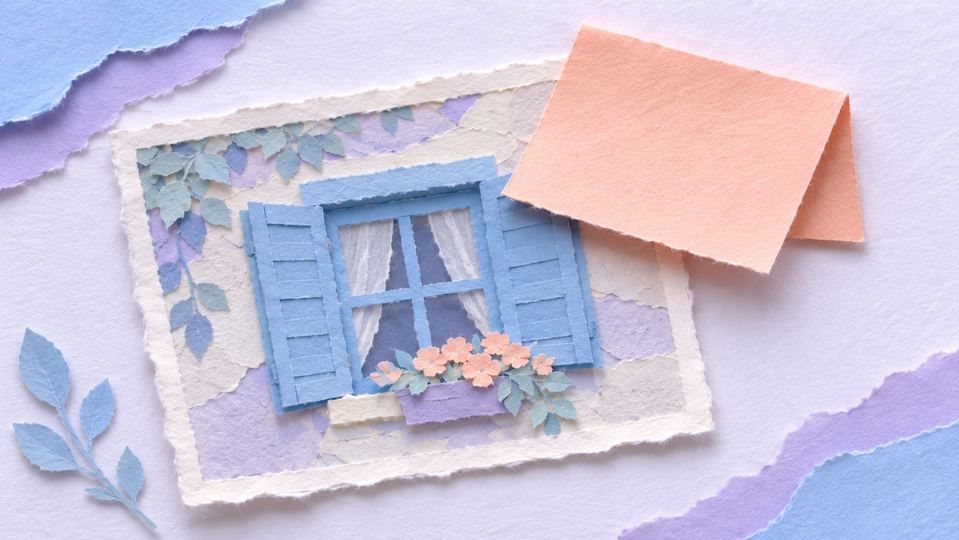
Your camera roll has several pictures of the same dinner. The food looks excellent. You can't remember what everyone was laughing about just before it arrived.
Photo journaling means keeping photographs alongside a little written context about your life. Start with one image, add what was happening outside the frame, and say why you chose it. Keep the entry somewhere you'll find it again. You can make one whenever a moment feels worth keeping, without documenting every day.
At MirrorMii, we build play around moments you choose to photograph. That choice matters here too: a personal photo journal starts with what caught your attention.
What turns a photograph into a journal entry?
The image gives you something to look at. Your words supply the part it couldn't record: who called, why you were there, what someone said on the way home. Keep the words beside the picture so you can reopen the whole entry.
For a first entry, try this format:
- The image: a picture you already want to keep.
- The context: one detail someone looking at the photo couldn't know.
- The reason: what made you choose this moment.
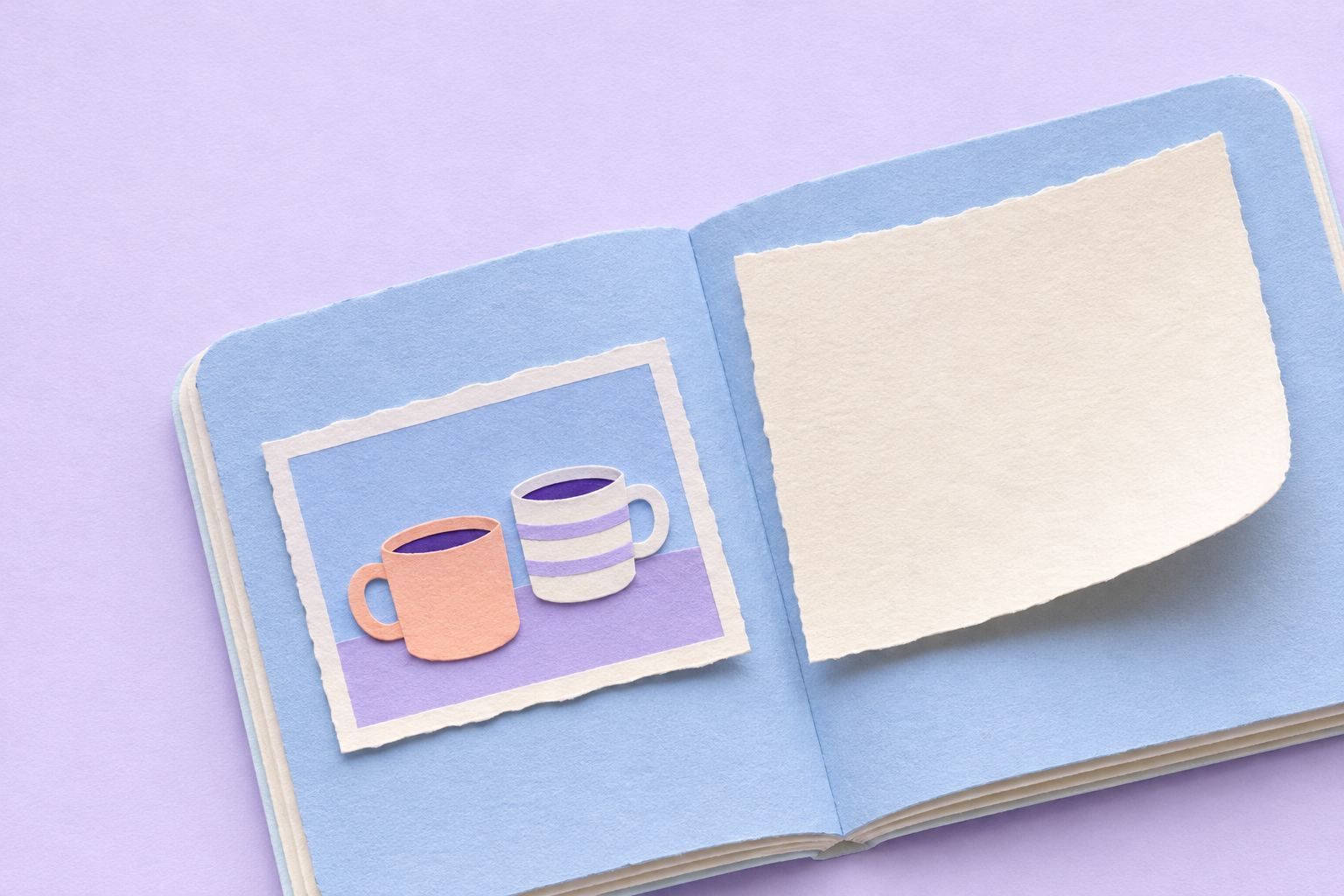
Here's a made-up example. The photo shows two mugs on a kitchen table. The context says, "My sister stayed after everyone else left." The reason says, "We finally finished the conversation we kept interrupting all weekend."
Now the two mugs have a conversation attached to them.
A practical entry works just as well. Photograph the windowsill where you finally fitted your plants, then note which shelf held the pots properly. Your journal can contain ordinary decisions alongside celebrations. Its job is to keep the things you'd like to revisit.

Is an ordinary day worth recording?
You don't have to know what will become interesting later. Start with something specific enough that it belongs to this part of your life: the book travelling in your bag, the view from a temporary desk, the ridiculous arrangement of shoes by the door.
In a 2014 study of rediscovery, Ting Zhang and colleagues at Harvard Business School found that people underestimated how interesting ordinary records would be to revisit. Their experiments included personal time capsules and recorded conversations. The study gives ordinary details a reason to stay; it didn't test this photo-journal format.
Try choosing an entry by asking, "What would I have to explain to someone who wasn't here?" A supermarket receipt might need a sentence about the recipe you attempted. A picture of a nearly empty room might need the date your flatmate moved out.
Keep some plain entries. A journal filled only with exceptional weekends leaves out the cereal bowl, borrowed jumper and half-finished book that actually occupied your week.
If you want a daily photography project with a list of things to shoot, use our photo a day challenge. This guide is about giving an individual image a story, whenever you decide to save one.
How much do you need to write?
Begin with a sentence you can say aloud. "The bus was late, so we walked the last bit together" is enough context for a photograph of two wet coats. Add another sentence if there's something else you want to keep.
When words won't come, complete one of these:
- "You can't see it here, but..."
- "I took this because..."
- "Just after this..."
These are ways into an entry, so change them once you know what you mean. You don't need to use every prompt or repeat the same one on each page.
Separate the day you took the photograph from the day you wrote about it. If you're filling in an older entry, say what you remember and leave uncertain details uncertain. "I think this was the afternoon we missed the train" is more useful than confidently giving the wrong story.
A photograph doesn't have to be beautiful to earn a page. The blurred picture might be the one with your friend's whole laugh in it. Choose the image that gives you something to say, then stop editing once it does that job.
Where should the entries live?
Choose a place you already know how to open. A notebook with printed photos, a document with one image per entry, or an album that supports notes can all hold the format. Check that you can get both the pictures and the words back out before committing a long collection to a service.
Give the entry a date and a short title you'll recognise. "Saturday noodles with Jo" will be easier to spot in a list than "Entry 08". If your photo library and notes live separately, include the image in the entry so the link between them survives.
Privacy belongs in the choice too. Ask before including someone else's private conversation or a revealing photograph. You can keep a page for yourself, leave out a name, or record your own part of an evening without preserving everyone else's.
Once you've made a few entries, open one again. Does the note tell you anything beyond what's visible? If it only says "coffee", add the reason this coffee made it into the journal. That's a concrete edit you can make without redesigning the whole collection.
What if you want the moment to lead into play?
A photo journal keeps your account of a day. MirrorMii makes a game of selected moments from your real day. Snap something for a quest and earn pieces for Miia's wardrobe. You choose her outfit; she has her own life to get on with.
In our game design, you choose what to capture for a quest. Photo Hunt is the camera you use to take that picture. Your photo journal stays your own account of the day; Miia's diary tells her story, which you can read as her life unfolds.
For your journal tonight, pick the picture you keep scrolling back to. Write the sentence the camera couldn't.
FAQ
Can I use photos I took months ago?
Yes. Choose an older photograph and write the context you still remember. Keep guesses visible, especially dates, names and the order of events. If you write about it today, include today's date separately from the photo date. You can also ask someone who was there, without presenting their answer as your own memory.
Do I need to print my pictures?
Printing is optional. A digital entry with the picture and text together is enough to start. If you prefer paper, print a few selected images before buying a large album or printer. The useful question is whether you'll open the journal again and be able to find the entries you want.
Does photo journaling have to be shared?
A personal photo journal can stay private. Decide who each entry is for before uploading it to a public account or shared album. A page about a meal might include someone else's face, home or conversation. Keep their privacy in view even when the photograph itself feels ordinary.
Choose a quest. Take a picture. Play MirrorMii with moments from your real day. Join Free